

Daikin opens NZ hub reusing refrigerant to cut emissions
Mon, 23rd Feb 2026
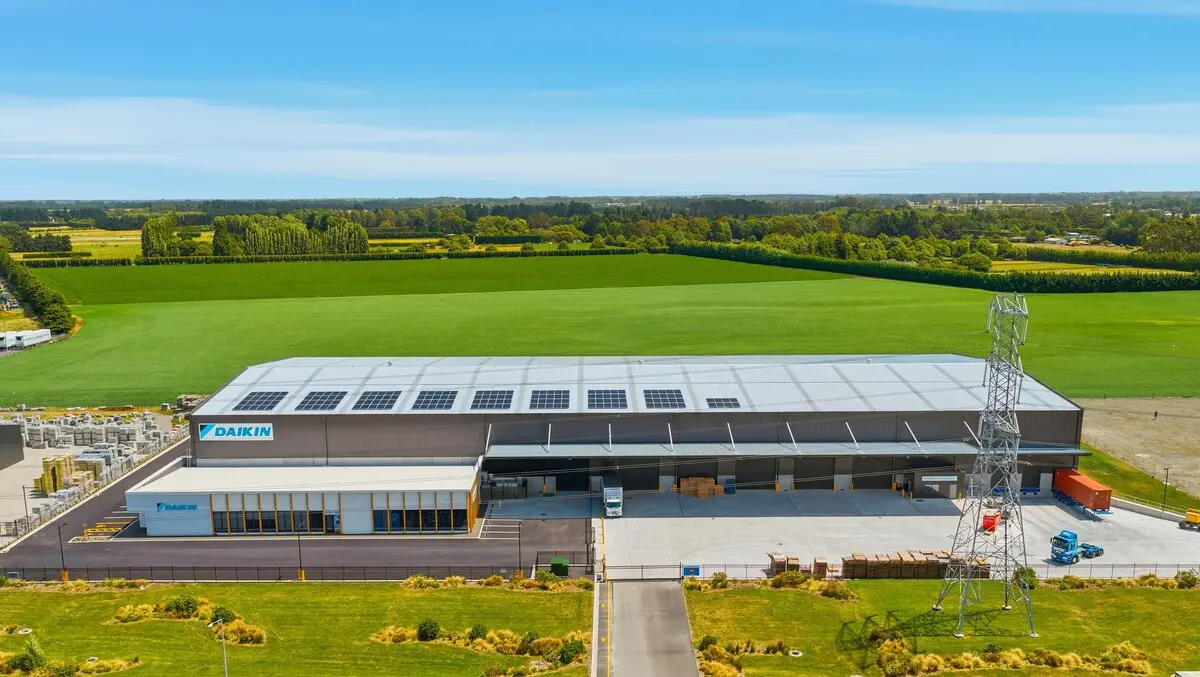
Daikin has opened a new multi-million-dollar logistics and training facility in Christchurch that uses reclaimed refrigerant from end-of-life heat pumps in its own heating and cooling systems.
The 7,861sqm site, known as Daikin Park Christchurch, consolidates two existing Canterbury operations into a single hub. Daikin describes it as the South Island's largest dedicated heating, ventilation and air conditioning warehouse.
The facility includes a refrigerant recovery, reclamation and reuse model that takes gases from retired residential and commercial heat pump systems and returns them to service after cleaning and reprocessing. The aim is to keep refrigerant out of the waste stream, where mishandling can lead to releases of high global warming potential gases.
Refrigerant focus
Fluorinated gases account for about 2 percent of New Zealand's total greenhouse gas emissions, according to government data cited by Daikin. Around 94 percent of fluorinated gas emissions come from hydrofluorocarbons, which are widely used as refrigerants in HVAC systems, vehicles and appliances. Many have high global warming potentials, which can magnify the impact of even small leaks.
Government modelling projects fluorinated gases could contribute more than seven million tonnes of carbon dioxide equivalent over New Zealand's first emissions budget period without additional measures. New Zealand has also committed under the Kigali Amendment to the Montreal Protocol to phase down high global warming potential refrigerants by more than 80 percent by 2037.
Daikin's model relies on a nationwide network of hundreds of Daikin-accredited installers, who recover refrigerant from equipment at the end of its service life. The gas is captured, consolidated and sent for reclamation rather than vented or destroyed. After it is cleaned and reprocessed to international purity standards, it is recommissioned for use in the Christchurch facility.
An independent lifecycle analysis cited by Daikin found reclaimed refrigerant can reduce the carbon footprint of refrigerant supply by between 72 and 90 percent compared with producing and importing new refrigerant, depending on the gas type. Daikin noted the results reflect overseas supply chain conditions.
Supply constraints
Ryuta Hayashibara, Managing Director of Daikin New Zealand, linked the initiative to rising attention on refrigerant availability and costs as regulations tighten.
"As supply caps tighten and emissions pricing is applied, the cost of servicing and replacing refrigerant is becoming a more material part of building operating costs," Hayashibara said.
"At the same time, refrigerants are a critical enabler of high-efficiency heat pump technology. They allow modern systems to deliver low-emissions heating and cooling, so the focus needs to be on managing this resource properly - minimising losses, improving recovery and using it more efficiently, rather than treating it as disposable. Developing practical models that work operationally and commercially is essential if the sector is going to scale responsibly," he added.
He also pointed to South Island demand patterns, where longer heating seasons and colder winter lows can drive heat pump uptake and increase the volume of refrigerant in circulation.
"This facility supports growing demand for electric heating and cooling in the South Island, but it also reflects the need for more control over supply chains, service response times and refrigerant availability as regulations tighten," he said.
The facility is part of a broader long-term investment programme in New Zealand, aimed at strengthening logistics and training capacity as the industry faces shifting technology and compliance requirements.
Site operations
The building has a 5 Green Star Design and As-Built rating. It is fully electric and includes a 100kW rooftop solar system, electric vehicle and materials-handling charging infrastructure, and a heat recovery HVAC system that can provide heating and cooling to different areas at the same time.
The site can distribute around 450,000 cubic metres of freight a year and includes more than 6,400 pallet spaces across racking, rooftop storage, and specialist duct and parts zones.
It also houses Daikin's South Island sales team, a trade centre and a working showroom, alongside a training academy focused on technician development as the sector moves towards more electrified heating systems and stricter refrigerant handling practices.
Replicable model
Ryan Philp, Head of Sustainability at Daikin New Zealand, said the priority is stronger refrigerant management across installation, servicing and decommissioning.
"For us, this is about managing refrigerant responsibly across its full lifecycle - from system design and installation, through operation and servicing, to decommissioning at end of life," Philp said.
The initiative has been recognised under the Green Star innovation framework. Philp said the same approach could be applied to large buildings with significant refrigerant volumes, including hospitals, data centres and complex commercial sites.
"Refrigerant is a critical resource that enables high-efficiency heat pump technology, and managing it properly is essential if the industry is going to move toward more circular, low-emissions operating models," he said.