

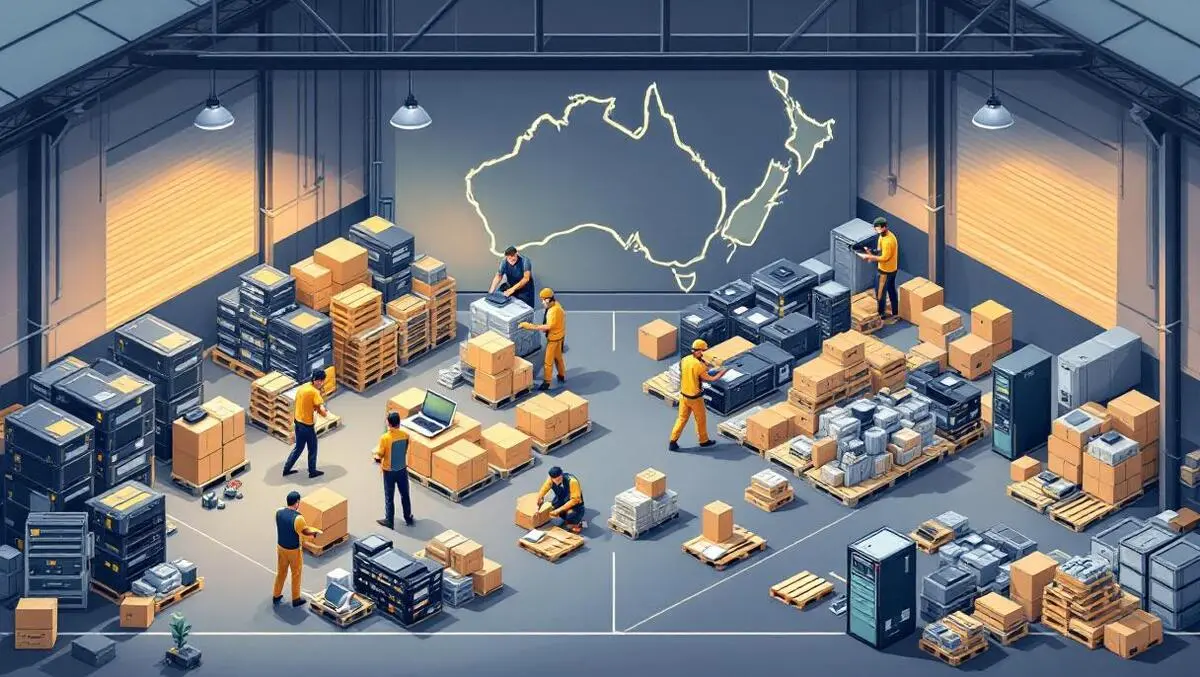
Echo buys BMS to build end-to-end tech lifecycle group
Thu, 5th Mar 2026
Echo has acquired IT asset disposition specialist BMS, bringing two New Zealand technology lifecycle firms under one ownership group and adding BMS founder Stephen Westcott Jones to Echo's board.
The deal combines operations across equipment recovery, refurbishment, remarketing and recycling, positioning the group as a broader option for organisations managing end-of-life IT equipment and electronic waste.
Westcott Jones will join Echo's board and become a shareholder. BMS was founded by Stephen and Claire Westcott Jones and operates in New Zealand and Australia.
Echo wants the enlarged group to cover more of the technology lifecycle, from managing used devices to responsible processing of electronic waste, with recovery, remarketing, refurbishment and recycling as core services.
"We're committed to building long‐term capability for sustainable technology lifecycle services and e-waste processing in Aotearoa New Zealand, and this acquisition is a substantial step towards that ambition," said Patrick Moynahan, Echo CEO.
The companies report sizeable existing volumes across reuse and recycling. Together they repurpose more than 150,000 IT assets for resale and process more than 4 million kilograms of electronic waste each year.
Moynahan said the merged group will emphasise value recovery and data protection as devices move through refurbishment, resale or recycling streams.
"The combination of these market leading businesses will create a true end-to-end technology lifecycle partner, maximising value recovery, protecting sensitive data, and accelerating the transition to a circular economy," he said.
Customer continuity
Customers that already use both businesses will keep their existing arrangements while integration planning continues. Accounts and contracts will remain separate during that period.
Integration work will run alongside ongoing collection, processing and resale. Both firms operate in the technology "circular economy", which aims to extend the usable life of devices and materials rather than sending equipment to landfill.
For BMS, the transaction links an ITAD and refurbishment business with an e-waste recycler. BMS focuses on secure data destruction, refurbishment and remarketing of end-of-life IT equipment. It works with leasing companies, government agencies and large enterprises, with an emphasis on compliance and data security.
Westcott Jones described the deal as a combination of complementary businesses.
"The transaction will allow us to build on the strong foundations of BMS and take our customer offering to the next level by integrating with Echo," said Stephen Westcott Jones, BMS founder.
Altered backing
Echo received investment in 2025 from growth equity firm Altered Capital. That backing continued with the acquisition of BMS, which Altered views as expanding Echo's reach in New Zealand's managed IT lifecycle market.
Altered Capital partner Sam Rapson said demand is rising for services focused on data protection, compliance and responsible reuse of equipment.
"By bringing Echo and BMS together under shared ownership, we are backing a scaled platform with the leadership, capability and credibility to serve enterprise, Government and leasing customers to the highest standard," Rapson said.
Operations and assets
Echo describes itself as New Zealand's largest e-waste recycling company, with nationwide services for tech reuse and repurposing. It also owns the BLUBOX e-waste technology, which it says diverts thousands of tonnes from landfill each year.
The acquisition links that recycling footprint with BMS's refurbishment and remarketing operations and its processes for secure data destruction. Industry buyers increasingly require auditable handling of data-bearing assets such as laptops, servers, storage equipment and mobile devices, which can shape how devices are stored, wiped, refurbished, resold or dismantled.
The combined group expects to offer a single lifecycle pathway for equipment that can be redeployed and for material that must be broken down for recycling. The companies have not disclosed financial terms or a timeline for integration beyond maintaining current customer contracts in the near term.