


AoFrio survey shows beverage firms eye AI & cooler tracking
Tue, 17th Nov 2026 (Today)
AoFrio has published survey findings showing strong interest from beverage companies in cooler fleet tracking and AI-based predictive maintenance. The results also point to a gap between willingness to test AI tools and confidence in their business impact.
The New Zealand refrigeration technology company surveyed 157 respondents across beverage businesses and equipment manufacturers, including 102 beverage company contacts and 55 OEM contacts. Among beverage companies, 89% said sourcing cost-effective digital tools to track cooler fleets was extremely important, while 84% said they were interested in trialling low-cost tracking tools in the next six to 12 months.
The data suggests asset tracking remains the most immediate concern for operators managing large numbers of branded refrigeration units across wide geographic areas. Respondents were seeking better visibility over equipment as brands try to protect returns from cooler fleets that can number in the tens of thousands.
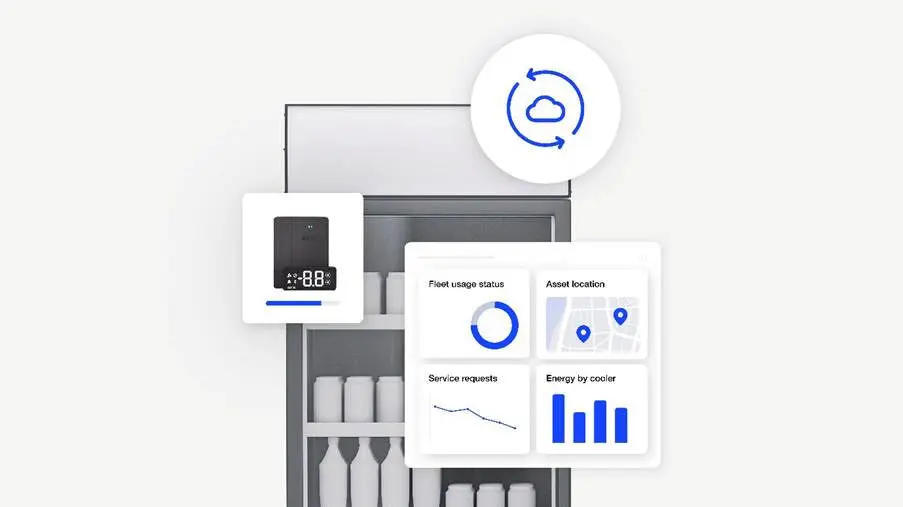
Greg Balla, Chief Executive Officer of AoFrio, said fleet management had become a costly and operationally complex task for beverage groups.
"Maintaining a large fleet of coolers, often more than 10,000 refrigeration units spread across a geographically diverse region, is a complex and expensive task. Digital tracking through connectivity is a way of protecting the return on investment that beverage companies make in their refrigeration assets," Balla said.
The findings also show growing interest in more persistent forms of connectivity. Some 66% of beverage companies said they were interested in trialling or adopting always-on connectivity in the next six to 12 months, making it the third-highest-ranked technology priority in the survey.
Balla said current fleet monitoring often relies on Bluetooth-based Internet of Things devices, but respondents were showing increasing interest in cellular systems that can keep coolers connected continuously and support two-way communications.
"Bluetooth-enabled IoT devices are how most fleets get tracked today, but cellular technology is the future. It enables always-on connectivity, richer data and more opportunity to act on insights through two-way communication between a connected cooler and the asset manager," Balla said.
AI interest
Interest in AI was also high, particularly in maintenance. The survey found that 77% of beverage companies were interested in trialling AI-driven predictive maintenance in the next six to 12 months, ranking it as the second-highest technology priority.
When asked what they most wanted AI to do, respondents most often pointed to equipment failure and wasted energy. AoFrio said 23% of beverage company respondents most wanted AI to identify failures or energy losses before they happened.
That enthusiasm did not fully translate into perceived value. Of the 77% interested in AI predictive maintenance, only 36% rated it among the technologies likely to have the highest business impact.
The gap was wider in other AI-related categories. AI fleet management attracted 48% interest, but only 16% of respondents rated it as high impact, while digital twin modelling fell from 14% interest to just 1% in high-impact ratings.
"As the industry embraces AI with more belief, we expect the benefits will come," Balla said.
OEM pressures
For equipment manufacturers, the survey points to a different but related set of pressures. AoFrio said 78% of OEMs rated making their coolers stand out in the market as extremely important, at a time when raw material and component price volatility is weighing on margins.
That leaves manufacturers balancing cost control with efforts to differentiate products beyond hardware alone. The pressure is driving greater attention to software, connectivity and energy performance.
"When component costs are under pressure, cutting cost on the wrong part of the cooler just moves the expense onto the customer's service bill later. OEMs in this industry that innovate and use AI and other technology to drive down costs for customers will find success. While we are looking at lower-cost motors to help alleviate costs, AoFrio's focus is on providing our OEM partners with hardware and software that meets their customers' growing needs around energy efficiency and connectivity," Balla said.
Energy focus
Energy use emerged as another major issue in the survey. AoFrio said 66% of beverage companies and 80% of OEMs rated reducing cooler energy consumption as extremely important, with energy efficiency ranked as the top technology priority for OEMs.
The company linked that concern to tougher climate disclosure requirements, shareholder scrutiny, consumer expectations and internal environmental, social and governance programmes. In that context, energy efficiency is moving from a voluntary consideration to a more formal operating requirement.
Balla said the issue had shifted from earlier concerns about ozone depletion to a broader focus on power consumption, operating costs and product life.
"Ozone depletion was the issue for years; now it's energy consumption and, more broadly, cost savings. An energy-efficient motor reduces how much energy a cooler consumes, but it's also more sustainable from a longevity angle. It runs cooler, so the compressor doesn't have to work as hard, which means fewer replacements and less waste over the life of the cooler," Balla said.
AoFrio said the broader theme running through the survey was a shift in how beverage companies viewed refrigeration assets. Rather than treating coolers only as capital equipment, some respondents were increasingly seeing connected units as a source of operational and commercial data.
"Beverage companies that treat their refrigeration fleet as a data and revenue asset, rather than a capital liability, will carry a structural advantage into the next phase of growth," Balla said.