

FriendWe launches map to foster real-world connections in NZ
Tue, 18th Nov 2025
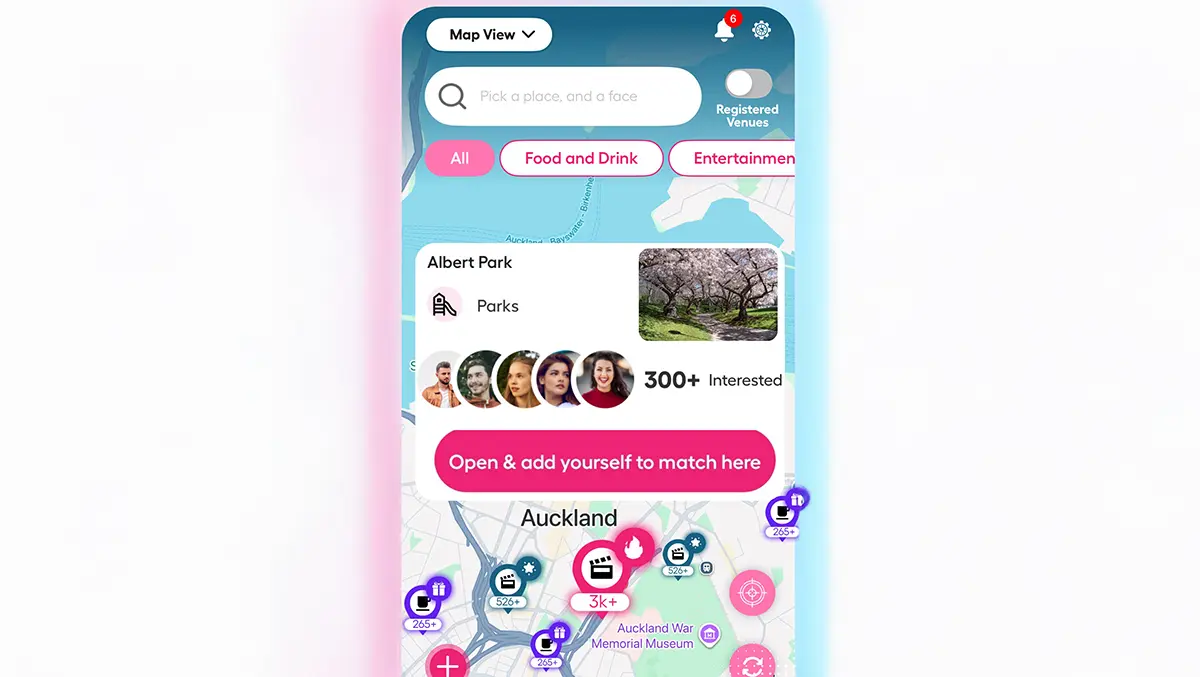
A new digital platform has launched in New Zealand aiming to address social isolation by providing a map tailored for real-world human connection rather than point-to-point navigation. FriendWe, developed by Auckland-based Ahmad Aljazeeri, seeks to position itself as a social alternative to traditional navigation maps.
Product focus
FriendWe enables users to select a local venue-such as a café, park or hiking trail-as a potential meeting point. The platform then reveals how many other users are also open to meeting at that spot. Profiles become visible only once a meeting location is chosen, prioritising privacy and intention over passive browsing. The system is designed for both friendship and dating, as well as group activities including board games and outdoor recreation.
Aljazeeri, who previously worked as a radiographer, said the inspiration stemmed from shortcomings in existing location-based platforms, which are typically built on navigation systems designed for vehicles.
"Google Maps is incredible for getting from A to B. But it was never designed for helping people meet. New Zealand felt like the right place to build the map they never did-a map for community," said Ahmad Aljazeeri, Founder, FriendWe.
Technical independence
Unlike many startups that rely heavily on existing mapping APIs, FriendWe has rebuilt the core mapping infrastructure from the ground up. This approach has allowed for greater flexibility in adding features commonly blocked by API rate limits and pricing structures. It also supports the integration of a "social layer" that can be tailored to specific user activities.
Aljazeeri and a small team spent over 5,000 hours developing prototypes and testing custom mapping behaviours before bringing the platform to public release. The architecture is designed to reduce swiping fatigue and pressure, making it easier for new users to participate without exposing their location publicly on a map.
Privacy and safety
FriendWe's system does not display users as map markers. Instead, each location shows only the number of people interested in socialising there. Users retain control over their visibility, with profiles accessible only following a place selection. The platform features redesigned safety and reporting mechanisms intended to lower social barriers and increase accountability without sacrificing privacy.
Aljazeeri highlighted the focus on women's and newcomers' safety. The meet-up process is structured to make intentions clear and facilitate safer real-world interactions, which he said could address some common concerns in the dating and social networking space.
Context of launch
The rollout comes amid rising rates of loneliness in New Zealand, particularly among young adults and recent migrants. Many are seeking alternatives to swipe-based applications, which critics say often fail to translate matches into real-life meetings. Existing platforms also face growing challenges from artificial intelligence-driven profiles and bots.
Development process
The platform underwent a period of public testing in a basic form before this wider launch, which introduces dynamic activity matching and scalable architecture designed for international expansion. Aljazeeri explained that the early iteration of the app fell short of user needs, prompting further research and redesign.
"We made our early version public too soon. But that mistake helped us learn what people really needed. This new map is the real foundation," said Aljazeeri.
Addressing social isolation
Statistics highlight a growing sense of disconnection in New Zealand. Surveys suggest one in four residents do not have close friendships, with rates of loneliness most acute among Generation Z. Adults report increased difficulty forming new social bonds after leaving university, and migrants often note challenges integrating.
FriendWe intends to offer a venue-driven, 'place-first' approach to encouraging more deliberate and safer in-person encounters. The company positions itself as building on New Zealand's wider history of digital mapping advances, while refocusing the technology toward social rather than geographic objectives.