

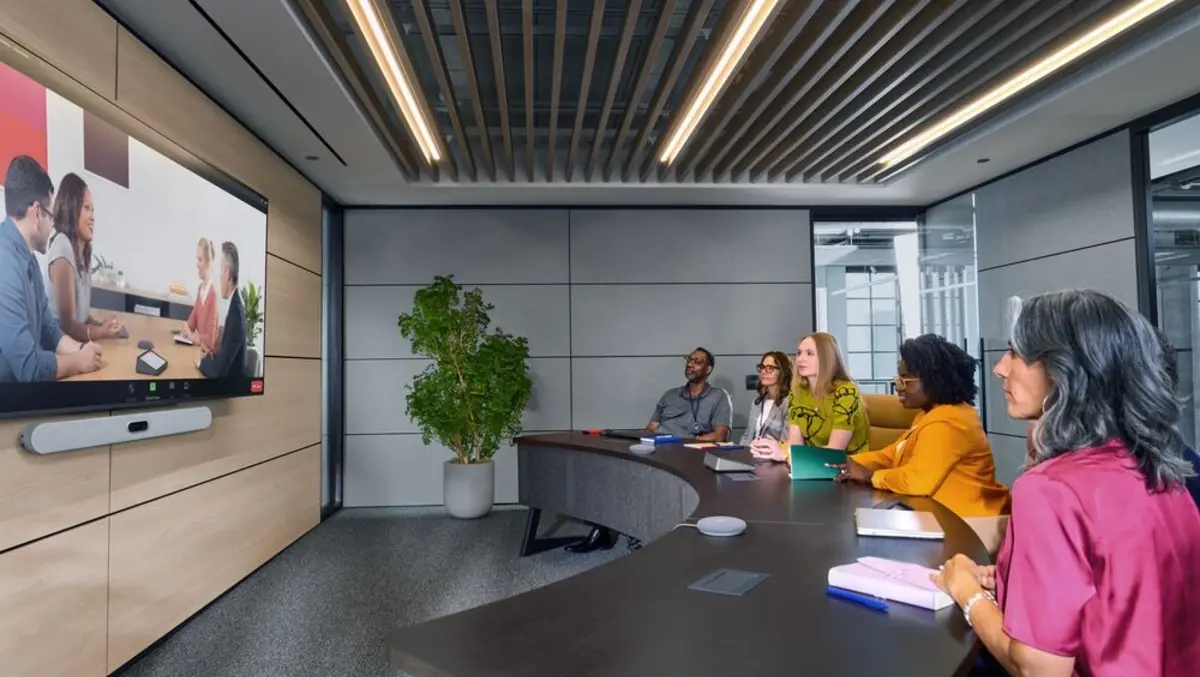
Logitech urges Australian firms to rethink meeting rooms
Tue, 17th Nov 2026 (Today)
Logitech has urged Australian businesses to review how they allocate meeting rooms in hybrid workplaces, arguing that office attendance patterns are leaving larger spaces underused.
Joseph Touma, Category Manager for Team Workspace at Logitech for Business ANZ, said established hybrid work habits had created a mismatch between room size and the number of people physically present in meetings.
Australian Bureau of Statistics figures cited by Logitech show 36% of employed Australians usually worked from home in August 2025, little changed from the previous year. Touma said that stability suggests hybrid arrangements are no longer a temporary shift and are now shaping how office space is used.
He said older office layouts were not always suited to meetings where some participants join remotely. As a result, larger rooms can be occupied by small in-person groups while bigger teams struggle to find suitable space for meetings that require more seats on site.
Touma said that means companies should rely more on attendance and occupancy data when deciding how rooms are assigned. The goal is to identify when rooms sit empty, when small groups book oversized spaces and when demand is highest during the working week.
Use of data
Touma said the information can help IT and facilities teams make decisions based on measured usage rather than assumptions. Sensors and related hardware, he added, can track how many people are physically in a room and how often different spaces are used.
"Hybrid working has had a profound impact on all aspects of the working day, and this can be clearly seen in the meeting room," said Joseph Touma, Category Manager for Team Workspace at Logitech for Business ANZ.
"Where once a meeting would've been 12 people sat around a boardroom table, now it's a split between people attending in person and others dialling in.
"Think of it like a restaurant: you wouldn't sit a couple at a table for 12 and shoo away a larger party arriving at the same time. Those empty chairs show how offices haven't caught up with how Australians are now working, and can cause friction when bigger groups in the office are locked out of larger rooms for important meetings."
The comments come as employers continue to examine office costs and the return on workplace technology spending. In that context, room occupancy data is being presented as one way to assess whether existing floorplans still match staff behaviour.
Office pressure
Touma said meeting rooms had become one of the more visible points of friction in hybrid offices because they bring together physical space, staff schedules and video conferencing requirements. A room designed for a large in-person gathering may now host only a handful of employees while other participants join remotely.
That can create a bottleneck for teams that do need a larger room on the same day. In Touma's view, businesses may need to rethink not only booking rules but also the mix of room sizes across their offices.
Logitech tied that argument to its own workplace products, saying occupancy data from devices can help organisations understand room demand and in-person attendance. Its Rally Bar 2 and Tap Scheduler 2 are available in Australia.
"For IT and facilities teams, ROI comes from turning guesswork into evidence," Touma said.
"Hybrid working arrangements are clearly here to stay, and Australian businesses are continuing to adapt to improve productivity and reduce day-to-day friction. How meeting rooms are used is a new front line in that effort, including matching these spaces to meeting size and the number of in-person attendees.
"Technology that can detect and record when and how rooms are occupied, such as our new Rally Bar 2 and Tap Scheduler 2, allows key stakeholders to make more informed decisions about the space they have available. Businesses are always under pressure to get the most out of their existing resources, and the floorplan is absolutely part of that."