

The Ocean Cleanup & UN launch Asia-Pacific oceans pact
Mon, 12th Oct 2026 (Today)
The Ocean Cleanup and the United Nations Economic and Social Commission for Asia and the Pacific have agreed to develop the Asia-Pacific Clean Oceans Infrastructure Partnership.
The collaboration aims to reduce plastic leakage into rivers and oceans across the region.
The planned partnership, known as APCOIP, is designed to combine waste management systems, river and coastal interception, government policy work, and private-sector finance within one regional framework. It seeks to move beyond stand-alone clean-up efforts by linking downstream plastic collection with upstream changes in municipal infrastructure and regulation.
The two organisations have already signed a Letter of Intent. The agreement brings together The Ocean Cleanup, a Rotterdam-based non-profit focused on removing plastic from aquatic environments, and ESCAP, the UN regional commission that works with governments across Asia and the Pacific.
Regional focus
The initiative is expected to focus heavily on major urban centres including Jakarta, Manila, and Kuala Lumpur, where weak waste systems can allow plastic to enter waterways. Under the proposed structure, local waste infrastructure would be strengthened while interception systems would continue targeting plastic already flowing through rivers and coastal areas.
This would expand The Ocean Cleanup's current interception model, which has focused on catching plastic in rivers after it has already entered the water system. The organisation says that approach has so far intercepted up to 5% of the plastic reaching the ocean through river systems.
Through its 30 Cities Program, the non-profit is targeting interception of up to one-third by 2030. The new regional partnership is intended to place that work within a broader policy and financing structure.
APCOIP is built around four pillars: municipal waste management, river and coastal intervention, policy engagement with governments, and public-private financing models. The Ocean Cleanup will act as the exclusive partner for the river and coastal interception element.
Australian stake
The announcement also highlights the relevance of Southeast Asian plastic leakage to Australia. According to figures cited by the organisations, about 79% of the ocean plastic arriving in Australian waters from overseas originates in Southeast Asia.
That makes waste and river systems in neighbouring countries a matter of direct interest to Australia's marine environment, as well as a regional environmental issue. ESCAP's membership includes Australia, New Zealand, and Fiji, along with the Southeast Asian countries where The Ocean Cleanup plans to direct two-thirds of its operations over the next three years.
ESCAP's role is expected to centre on government access and cross-border coordination. The organisations say discussions with governments, development finance institutions, and other stakeholders have shown interest in a more structured programme on river interception and waste management.
Those discussions point to a model in which public and private funding would be combined to support larger infrastructure projects. This is significant because many of the interventions needed to stop plastic leakage, such as collection systems, sorting facilities, and policy enforcement, depend on municipal and national investment rather than clean-up technology alone.
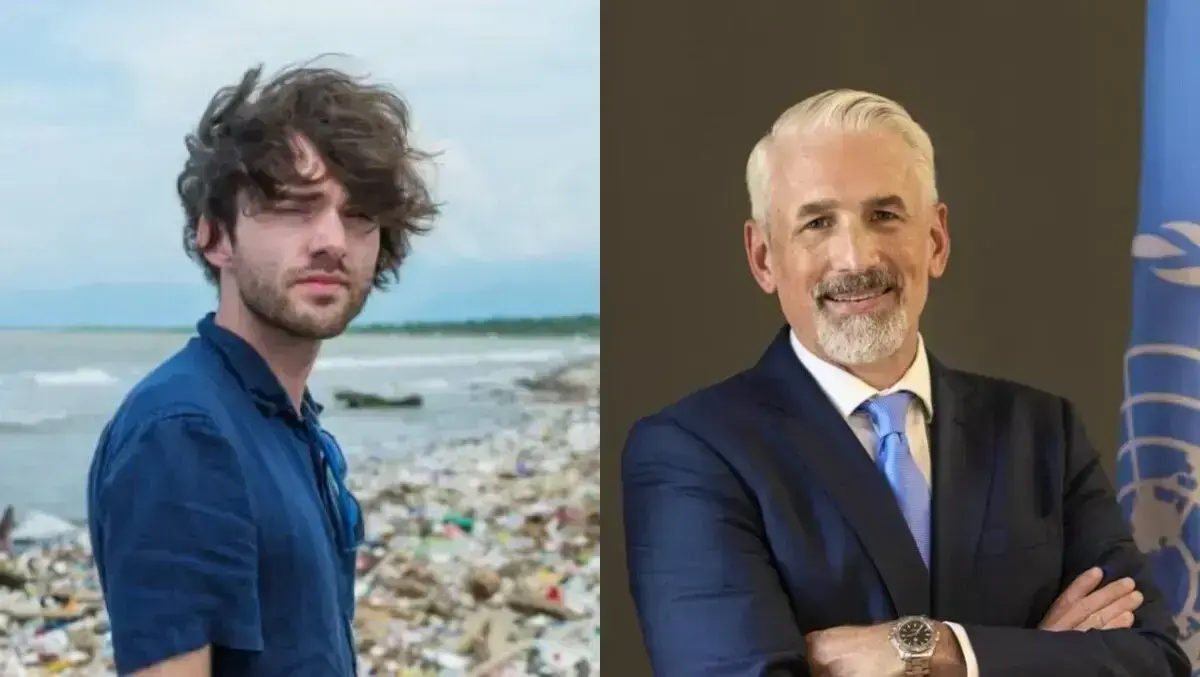
Boyan Slat, Founder & CEO, The Ocean Cleanup, said: "The future health of Australia's marine environment depends on waste systems working properly in cities thousands of kilometres away. Our Interceptor solutions catch plastic once it has already reached a river, which buys time, and that time only counts if the waste infrastructure and the policy behind that river catch up. APCOIP puts our river work inside a programme that also deals with municipal waste, regulation, and the capital to pay for it. We cannot fix the upstream half on our own, which is why we are building this with ESCAP."
As of September 2026, The Ocean Cleanup says it has collected more than 62 million kilograms of trash from aquatic ecosystems around the world. Founded in 2013, the organisation operates in 12 countries and employs about 200 people.
ESCAP is one of the UN's five regional commissions and works on economic and social cooperation across Asia and the Pacific. Its involvement gives the project access to a network of member states and development institutions that could help align waste policy and finance across borders.
For The Ocean Cleanup, the partnership broadens a strategy largely associated with interception devices in polluted rivers. By tying those devices to municipal waste reform and regional policy coordination, the organisation is trying to address the conditions that allow plastic to escape in the first place.
Shombi Sharp, Deputy Executive Secretary, ESCAP, said: "Plastic reaches the ocean across borders, so the response has to be transboundary too, and that is the work ESCAP exists to coordinate. The Ocean Cleanup has proven what interception can do in individual rivers, and our role is to connect that work to the governments, development banks, and investors who decide what happens on land. That combination protects the marine environment while building better waste systems for the communities living alongside those rivers."