Observability stories
Workspace managers can now handle access, spending and user changes in ChatGPT Work and Codex without switching between separate admin tools.
Macquarie Capital Venture Capital will help Coralogix expand in Australia and New Zealand as enterprise demand for observability tools rises.
AI rollouts are pushing SRE and platform teams to monitor models, manage incidents and fill governance gaps in production.
Security gaps are slowing business adoption of AI agents, as most technology leaders warn that governance and access controls lag behind their autonomy.
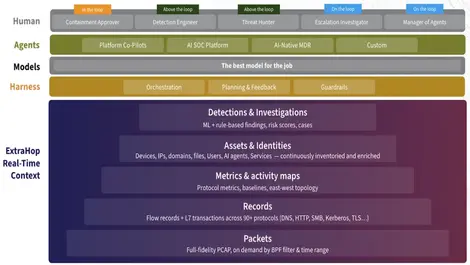
Security teams face wider blind spots as ExtraHop's new sensor brings full inspection of 400 Gbps data centre traffic to RevealX.
It is aimed at firms that want AI agents to update records and trigger workflows without losing oversight or audit trails.
Governed agents could speed urgent fixes in defence systems while keeping air-gapped code changes auditable, approved and traceable.
Customers running petabyte-scale analytics can now recover full WarehousePG clusters after site outages, cutting downtime and data-loss risk.
Enterprises in Asia-Pacific are moving AI from trials to production, driving demand for low-latency, distributed computing closer to users and data.
Security teams could gain clearer incident evidence as ClickHouse brings its trace data expertise to AI agent forensics alongside NVIDIA.
Rising AI-driven attacks are forcing businesses to test recovery plans before breaches hit, executives say, as minutes now matter.
Growing use by major tech groups is helping open source secrets manager OpenBao win trust as cloud and AI credential risks mount.
The recognition underlines Google Cloud's push to keep developers on one platform as enterprises move AI agents from prototypes into production.
Startups risk leaked keys, quota throttling and surprise bills unless they tighten controls as AI prototypes move into production.
Enterprise security teams now have a proposed benchmark for limiting AI agents to approved actions inside live systems.
Developers can now compare AI models on cost and latency through a single interface as Ramp opens its internal routing tool to outside users.
Enterprises can now run AI coding-agent workflows in production without rebuilding prototypes, as UiPath adds orchestration and governance controls.
Governance gaps are slowing enterprise AI adoption, with 79% of Australian DevSecOps professionals saying compliance is getting harder.
Australian enterprises risk extra compliance burdens as AI-made observability tools shift governance obligations onto in-house teams.
AI customers could see faster response times as NVIDIA shifts Vera Rubin into full production for inference and agentic workloads.