Quantum error correction (QEC) stories
The model is being pitched at coding, finance and security teams after Google said it sped up engineering work and helped patch serious flaws.
Real hardware tests could broaden access to quantum computing by letting Fujitsu's software run across neutral-atom machines and other designs.
The prototype could boost qubit stability and help Fujitsu scale quantum systems beyond small experiments, the company said.
The Swiss start-up will use fresh funding to expand its team and scale fabrication of trapped-ion chips aimed at hundreds of qubits.
Room-temperature photonic systems could help quantum machines slot into data centres and classical supercomputers without cryogenic cooling.
The tie-up aims to bring quantum processors into supercomputing workflows, with France, the UK and Germany as the first target markets.
Cloud users could gain access to fault-tolerant quantum computing in 2028, as QuEra and AWS expand their collaboration.
The chip is meant to solve qubit instability, a hurdle Microsoft says has delayed its goal of a scalable quantum computer until 2029.
Researchers can now probe fault-tolerant quantum computing trade-offs with an open-source toolkit that models phase estimation on ordinary laptops.
QuEra survey finds quantum buyers and backers are demanding stronger proof of value, even as 46% of organisations expect budgets to stay flat.
The move broadens Google's bet on fault-tolerant machines as rivals debate whether superconducting qubits or neutral atoms will scale fastest.
Quobly unveils silicon spin-qubit roadmap to 2032, targeting million-qubit quantum processors built on industrial FD-SOI manufacturing.
Quantum Machines unveils Open Acceleration Stack to link GPUs and quantum control with microsecond-latency hybrid orchestration.
PsiQuantum links Nvidia CUDA-Q to its Construct toolkit, promising GPU-accelerated quantum simulations up to 450 times faster than CPUs.
Canada's quantum manufacturing push gets a lift as federal backing supports a Toronto site aimed at scaling photonic hardware production.
Independent modelling puts Quantum Australia's national programmes at AUD $83.1 million, after helping launch 15 quantum startups in two years.
The tie-up could let researchers run more complex quantum algorithms on existing hardware without waiting for fault-tolerant machines.
AWS customers could access error-corrected quantum computing on Amazon Braket from 2028, as QuEra widens its cloud partnership.
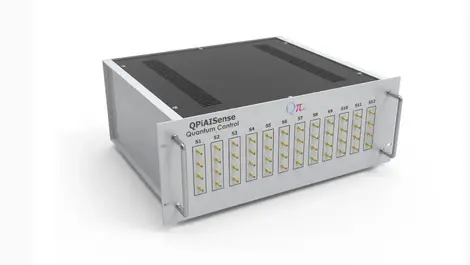
Hardware-based decoding could help keep superconducting qubits stable, with QpiAI's system now correcting errors in about 1.5 microseconds.
The hardware cut error-correction time on its 64-qubit processor to about 1.5 microseconds per cycle, helping quantum systems stay within coherence limits.