

Hands-on review: Apple iPhone 18 Pro refines the formula
Fri, 16th Oct 2026 (Today)
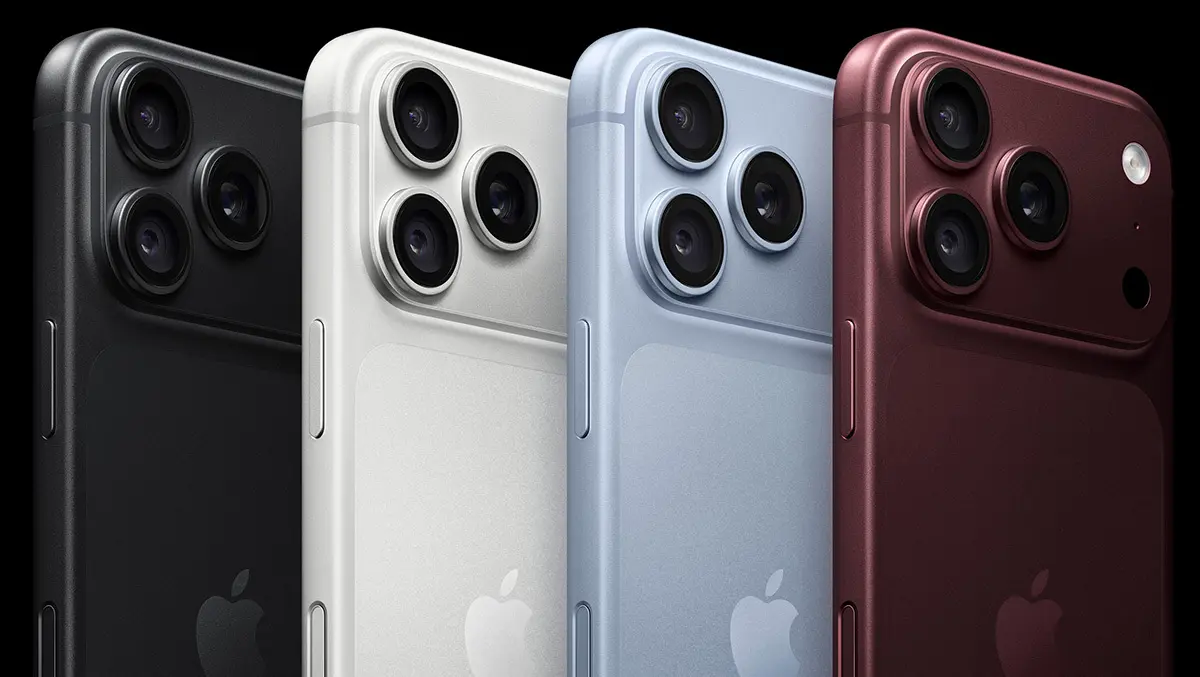
Apple's iPhone 18 Pro focuses on practical improvements. The main camera gains a variable aperture. Battery life improves, while revised cooling helps the processor handle demanding tasks. The Burgundy finish gives the familiar design a different character.
At AUD $2,499 NZD $2,949 including GST, the 512GB model needs to justify its price. These changes offer more to buyers replacing an older handset. Owners of an iPhone 17 Pro have fewer reasons to upgrade.
Familiar shape
The aluminium unibody and broad rear camera platform carry over from the previous generation. The rear glass now matches the surrounding metal more closely, giving the back a more consistent appearance.
Burgundy sits between dark red and purple, changing with the light. It is a restrained colour, though a case will hide much of the finish.
At 211g, the Pro remains substantial for a phone with a 6.3-inch screen. It is more manageable than the Pro Max, although buyers seeking a lightweight handset should look elsewhere. Ceramic Shield 2 protects the front, with Ceramic Shield covering the rear glass.
Clearer view
The 6.3-inch OLED display combines sharp text with adaptive refresh rates up to 120Hz. Scrolling is smooth, and the always-on display keeps basic information visible when the phone is locked.
Apple specifies peak outdoor brightness of 3,000 nits. This applies under particular conditions and is not maintained across every task. The anti-reflection treatment also improves outdoor visibility.
The Dynamic Island is around 25 per cent smaller and can show three Live Activities at once. It still occupies part of the screen, but the smaller footprint and extra information are useful refinements.
Camera control
The biggest hardware change is the 48MP main camera's variable aperture. Six blades adjust the opening through four settings: f/1.48, f/1.8, f/2.8 and f/4.0.
The camera selects an aperture automatically, so no photography knowledge is needed. A wider opening admits more light in dim surroundings. A narrower setting increases depth of field, helping keep subjects at different distances sharp.
This is particularly useful for close subjects with background detail, or group photographs with several rows of people. Aperture adjustment alone makes less difference to ordinary daylight landscapes. Its benefits depend on the scene.
The Camera app's Pro controls allow manual adjustment of aperture, shutter speed and white balance. A histogram helps assess exposure. Frequently used settings can be placed within easier reach, reducing the need for a separate camera app.
Photographic Styles adds texture and grain controls. These give users more control over skin detail and how processed images look, without requiring RAW editing.
Both other rear cameras remain 48MP units. The telephoto provides a native 4x view, with an 8x option using a sensor crop. There is no separate 8x optical lens. The ultrawide is useful for broader scenes, although its image quality does not match the main camera.
Video tools
Cinematic effects can now be applied after recording compatible video at up to 60fps. There is no need to decide on background blur before capturing a moment.
Time-lapse recording gains 4K resolution and Dolby Vision HDR. Audio Mix adds music isolation alongside its voice tools. These are useful additions for people who edit on their phones.
The 18MP Centre Stage front camera offers flexible selfie framing and automatically adjusts to fit groups. Dual Capture records the front and rear views together.
The 512GB capacity gives photographers more room than the entry model. Frequent ProRes recording still requires careful storage management, while external recording remains useful for demanding video work.
Sustained speed
The A20 Pro uses a 2-nanometre manufacturing process. It combines a six-core CPU with a seven-core GPU and a dual 16-core Neural Engine.
For intensive use, the more relevant change is thermal management. Apple places memory beside the processor and connects the chip directly to a redesigned vapour chamber. The chamber has three times the surface area of its predecessor.
Everyday app use feels much like the already responsive iPhone 17 Pro. The gains matter more during longer gaming sessions, video exports and other sustained workloads. Improved cooling helps, although extended camera use can still warm the phone. Apple's claimed improvement of up to 40 per cent in sustained performance does not apply equally to every app.
Longer endurance
Battery life is a stronger reason to consider upgrading. Apple rates the Pro for up to 34 hours of video playback, with a separate typical-use estimate of up to 23 hours per charge. Neither figure guarantees continuous screen-on time across all tasks.
Mixed daily use can extend beyond a full day. Gaming, navigation and prolonged recording will shorten that considerably. Gains also vary by task: better browsing endurance does not guarantee a matching improvement in streamed video.
Under Apple's test conditions, wired charging reaches 50 per cent in around 15 minutes. This requires a suitable 60W-capable USB-C adaptor with Adjustable Voltage Supply. An older charger may not deliver the same result.
MagSafe can reach 50 per cent in around 30 minutes with the appropriate charger and power adaptor. These accessories are sold separately.
Software limits
iOS 27 refines performance, personalisation and parental controls. Siri AI adds personal context and onscreen awareness to make requests across apps more useful.
Siri AI remains in beta, with availability dependent on language and region. Some cloud-based Apple Intelligence functions have daily usage limits. Apple also says expanded access to certain features will carry a fee in future.
These limits make the hardware a firmer basis for buying than expectations about AI. The camera and charging improvements are easier to weigh against an immediate need.
Buying decision
The 512GB model costs AUD / NZD $400 more than the 256GB version. The extra space suits substantial local photo libraries, downloaded media and regular video recording. Lighter users can save that money without sacrificing the camera or processor.
The iPhone 18 Pro is a capable refinement, with useful improvements in photography, endurance and sustained performance.
For owners of older Pro models, these changes can address everyday frustrations. Those with a healthy iPhone 17 Pro have less reason to upgrade. Although the new colours are worth the upgrade for some.