

Munich Airport uses Celonis to track baggage delays
Wed, 5th Aug 2026.webp)
Munich Airport is using Celonis to improve baggage handling, one of the airport's biggest operational pressure points.
By combining process data from systems, applications and devices through the Celonis platform, the airport is creating a near real-time digital twin of baggage operations. The model is designed to give staff a clearer view of where congestion builds, how bags move through the system and when intervention is needed.
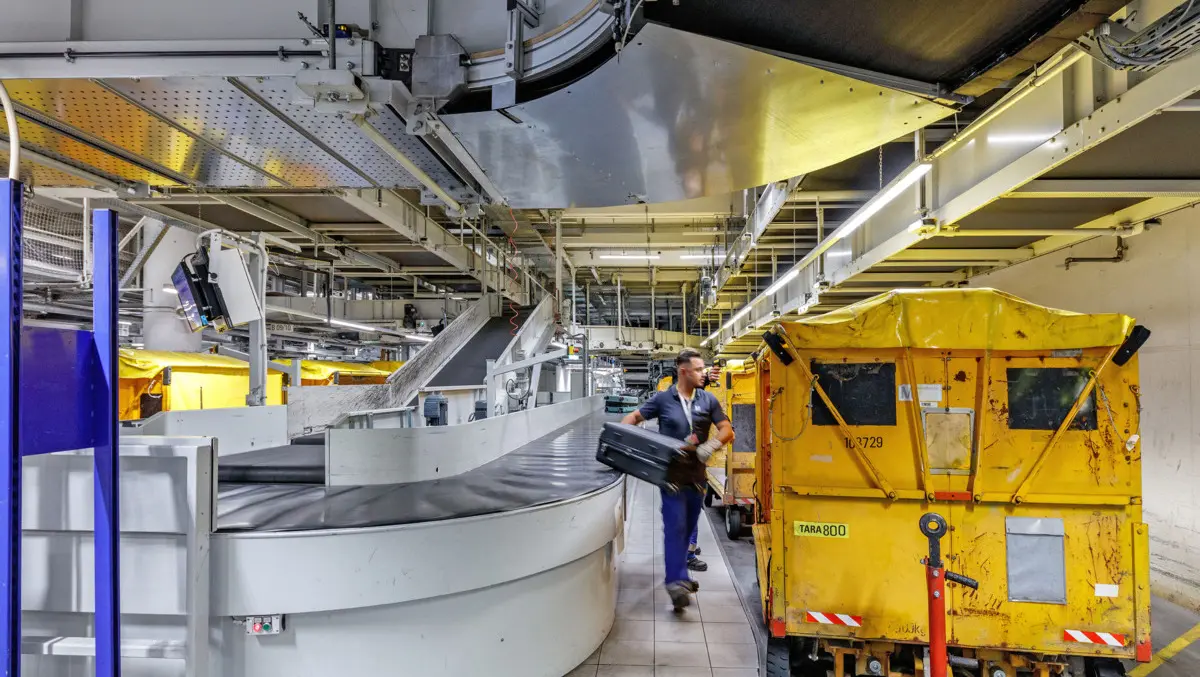
Baggage handling is one of the most complex parts of airport operations, involving multiple process steps and handovers. A single journey can span check-in, storage, recirculation, loading and discharge, with each stage relying on timely coordination between staff, equipment and aircraft movements.
Munich Airport is using the Celonis Context Model to connect operational information across those stages. This allows the airport to identify peak loads, track individual items of luggage across the full chain and trigger alerts when process thresholds are exceeded.
Operational view
One aim is to improve capacity management by showing when and where pressure points emerge. That could help ground handlers pre-process bags during quieter periods, reducing strain on storage, retrieval and recirculation during busier windows.
A second focus is monitoring baggage movements in near real time. Staff in the baggage control centre can follow the process chain from check-in to discharge and act when a disruption risks becoming a delay.
The system can also automate alerts in critical situations. When thresholds are breached, responsible employees receive notifications in near real time, according to the companies.
"With its innovative approach to aviation operations, Munich Airport is cementing its position as one of the leading European hubs," said Florian Schewior, Managing Director DACH, Celonis.
"We look forward to growing our longstanding partnership and helping the airport meet its strategic objectives. Together, we are turning process excellence into tangible value for passengers and the airport's stakeholders," Schewior said.
Munich Airport presented the work as part of a broader effort to gain a more detailed operational picture across the airport. Dr Jan-Henrik Andersson outlined how that visibility is being used.
"Celonis gives us the context we need to see how our airport actually runs in real time," said Dr Jan-Henrik Andersson, Chief Commercial Officer, Munich Airport, incl. IT/Digital and Technology.
"This operational clarity enables us to spot and even anticipate bottlenecks, make smarter and faster decisions, and achieve meaningful outcomes from our AI deployments," Andersson said.
Connected processes
Baggage operations do not function in isolation from the rest of the airport. Munich Airport analyses activity through three main lenses: passenger processes, baggage processes and airside operations.
Julian Rott, Head of Data and Processes at Munich Airport, said those strands must work together to keep journeys moving. He also described how the airport is approaching process analysis.
"Each must run smoothly to ensure an efficient journey. You can distinguish three main processes from an airport's perspective. First, the passenger process. In parallel, there's the baggage process. And the third: airside operations - all the infrastructure. That's terminal construction, runways, facilities," Rott said.
He linked that approach to object-centric process mining, which maps relationships between different operational elements rather than treating each event stream separately.
"That's where Object-Centric Process Mining comes in. In the past, you had to build a new event log for every use case. Now, you can start with a few objects such as baggage, passengers, aircraft and build out from there," Rott said.
That relational view is especially relevant in baggage handling, where a single flight can involve hundreds of passengers, many pieces of luggage and multiple containers, all of which have to be linked correctly before departure.
Maximilian Hoffmann, Celonis Centre of Excellence Lead at Lufthansa, described how that complexity appears in practice and how airports can identify where a failure occurred.
"One passenger could have zero or many bags. There's one aircraft, but it could hold 580 passengers. Bags go into containers. Containers into aircraft. So you have relationships between all those objects - one-to-one, one-to-many, many-to-many. We call them subway lines. You see the passenger check in. The luggage gets dropped off. The passenger boards. But at departure time, if the bag isn't linked to the aircraft, it's missing. You immediately know the bag didn't make it," Hoffmann said.
Munich Airport is Germany's second-largest airport, and baggage handling has long been a critical issue for large hubs trying to limit knock-on delays. The ability to trace each bag through the system and quickly identify missed links can affect both aircraft turnaround and passenger experience.
The model gives employees in the baggage control centre a detailed view of the chain from check-in to discharge, with alerts designed to flag problems before they spread. In an environment where multiple handovers can turn small disruptions into broader delays, that visibility is central to the way baggage operations are managed.