

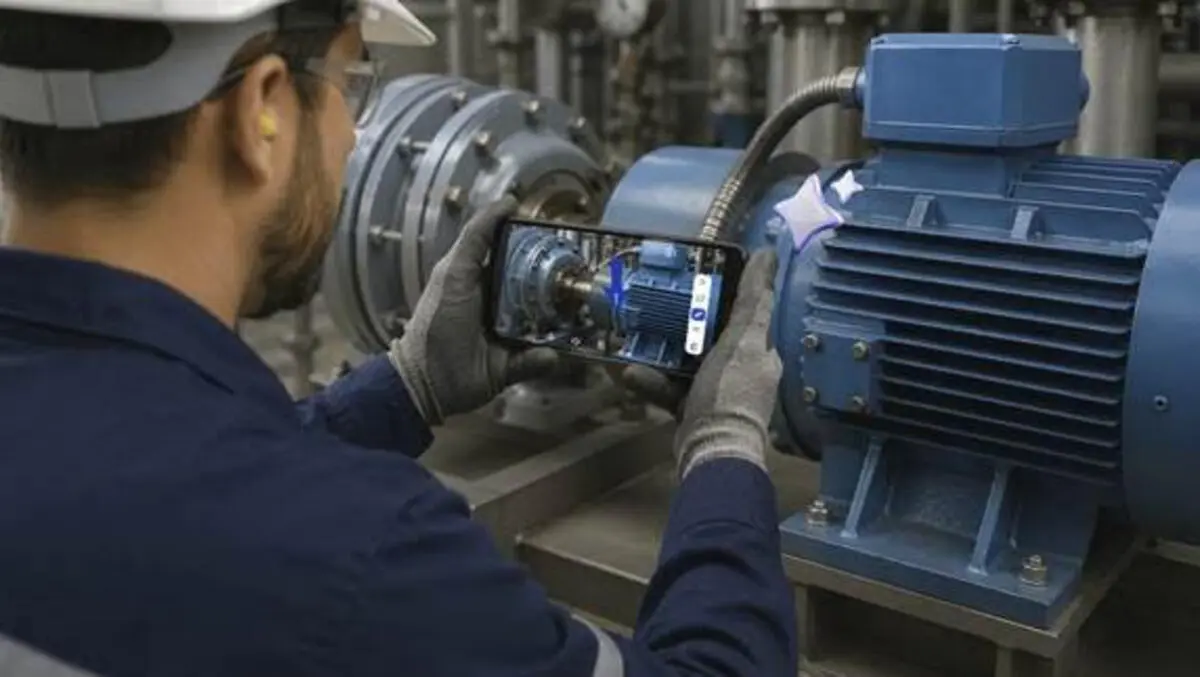
TeamViewer adds Microsoft AI video boost to Assist AR
Thu, 4th Jun 2026
TeamViewer has partnered with Microsoft to add AI video enhancement to its Assist AR remote assistance product for frontline workers using weak or unstable mobile connections.
The update brings Microsoft's Windows AI API for Video Super Resolution, or VSR, to TeamViewer Assist AR, part of the company's Frontline suite for industrial and field work. The software sharpens incoming video on the receiving device in real time, helping remote experts support technicians when bandwidth is limited.
That is especially relevant on factory floors, remote worksites and in field operations, where patchy connectivity can disrupt video feeds. In those environments, poor image quality can slow fault diagnosis and extend equipment downtime.
Frontline focus
TeamViewer cited manufacturing, healthcare, utilities and field services as key industries. The aim is to improve remote guidance so organisations can resolve issues faster and reduce the need to send specialists on site.
Microsoft introduced the Windows AI API for Video Super Resolution as a public preview at Ignite 2025. TeamViewer says the technology runs models locally on Windows PCs with powerful CPUs to reconstruct and sharpen video while making better use of available bandwidth.
Assist AR is designed for situations in which a field engineer or technician needs visual guidance from a remote colleague. Instead of relying on a clear, high-bandwidth feed, the new setup is intended to improve what the remote supporter sees even when the original connection is unstable.
"TeamViewer is a global leader in Frontline Worker Augmentation and specialises in Remote Guidance. We're thrilled to collaborate with Microsoft to deliver top-tier video resolution even under challenging network conditions for our users. This collaboration underscores our dedication to addressing real-world issues faced by those who keep operations running," said Alfredo Patron.
Device AI
The collaboration also reflects Microsoft's broader push to embed more AI functions directly into Windows devices rather than processing every task in the cloud. For software vendors, that offers a way to improve responsiveness and maintain features in environments where connectivity is unreliable.
For TeamViewer, the focus is frontline operations, where visual clarity can affect the speed and quality of a repair or inspection. A sharper image may help a remote specialist identify a faulty component or verify a procedure without asking the worker to repeat steps or move to an area with a better signal.
"At Microsoft we continue to invest in enabling on-device AI capabilities for Windows app developers, and we're pleased to partner with TeamViewer to enhance remote support experiences for our shared customers using the new Windows AI API for Video Super Resolution," said Mik Chernomordikov.
Wider rollout
The VSR-enhanced version of Assist AR is currently in closed beta. A wider release will begin in the coming weeks on Copilot+ PCs that support VSR.
TeamViewer also plans to extend the same function to other products in its portfolio. That points to broader use of on-device video enhancement across its remote support and workplace software, particularly for tasks in which image quality and low latency are central to the user experience.
TeamViewer is based in Göppingen and employs about 1,900 people worldwide. It generated around EUR 768 million in revenue in 2025 and serves more than 620,000 customers across industries.
Operational impact
For both companies, the agreement ties frontline software more closely to the emerging market for AI-enabled Windows computing. It also shows how device-based AI is being applied to practical operational problems, not just productivity tools.
The immediate use case remains narrow but commercially relevant: improving remote assistance for workers who often operate outside office environments and beyond reliable fixed broadband. In those conditions, video quality can determine whether a repair is completed remotely or escalated into a site visit.